Published September 10, 2026.
Article dates can appear in visible copy, structured data, Open Graph metadata, and sitemaps. Misalignment makes release history harder for readers and machines to interpret.
Research question
What do primary sources support as a defensible date-alignment routine for newly published articles?
Methodology and scope
We reviewed Google Search Central documentation on Article structured data and byline dates together with Schema.org’s Article vocabulary. We identified fields and visible signals applicable to standard articles, then translated them into release checks. We did not test eligibility for a specific rich result or analyze search-result date selection empirically.
Findings
Google recommends supplying datePublished and dateModified in Article markup and describes visible dates as signals for estimating publication or update time. Its byline-date guidance advises using a clear visible date and minimizing conflicting dates. Schema.org defines the publication and modification properties but does not determine Google’s display behavior.
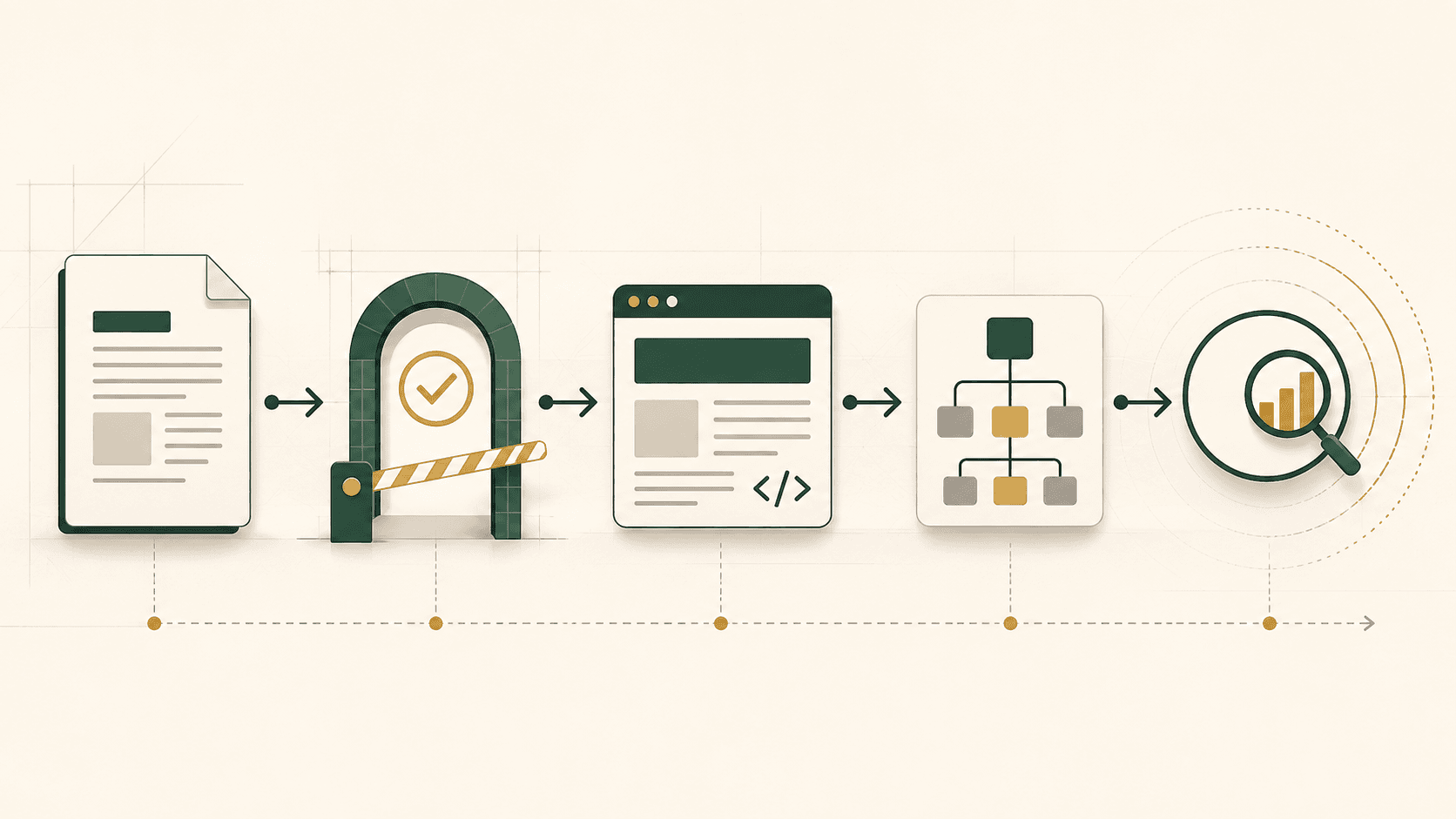
The practical control is alignment: a new page’s visible publication date, datePublished, and release record should describe the same event. A later substantive change may justify a separate modification date without rewriting publication history.
Operating interpretation
Inspect rendered text and JSON-LD on every public article. Compare ISO date values with the editorial record and ensure templates do not introduce unrelated dates near the headline. When a sitemap uses lastmod, treat it as a modification signal and update it only when the page meaningfully changes.
Inference boundaries and limitations
Consistent dates do not guarantee that a search engine displays a date or chooses the publisher’s preferred one. This synthesis does not define “substantive” for every site, address time-zone edge cases exhaustively, or validate news-specific requirements.
References
- Google Search Central. “Article structured data.” Accessed September 10, 2026.
- Google Search Central. “Influence your byline dates in Google Search.” Accessed September 10, 2026.
- Schema.org. “Article.” Accessed September 10, 2026.
Sources
- Google Search Central, ‘Article structured data,’ https://developers.google.com/search/docs/appearance/structured-data/article
- Schema.org, ‘Article,’ https://schema.org/Article
- Google Search Central, ‘Influence your byline dates in Google Search,’ https://developers.google.com/search/docs/appearance/publication-dates