Published September 9, 2026.
Daily SEO reviews often place the newest point on a chart beside older, more complete observations. That comparison can turn ordinary reporting latency into a false performance alarm.
Research question
What can a small content team responsibly conclude from the newest Search Console performance data?
Methodology and scope
We reviewed Google’s documentation for Search Console data, the Performance report, and bulk data export. We mapped the documented processing, aggregation, filtering, and privacy characteristics to a daily review workflow. This is a documentation synthesis; we did not obtain property-level raw data, test reporting latency across sites, or estimate a universal completion time.
Findings
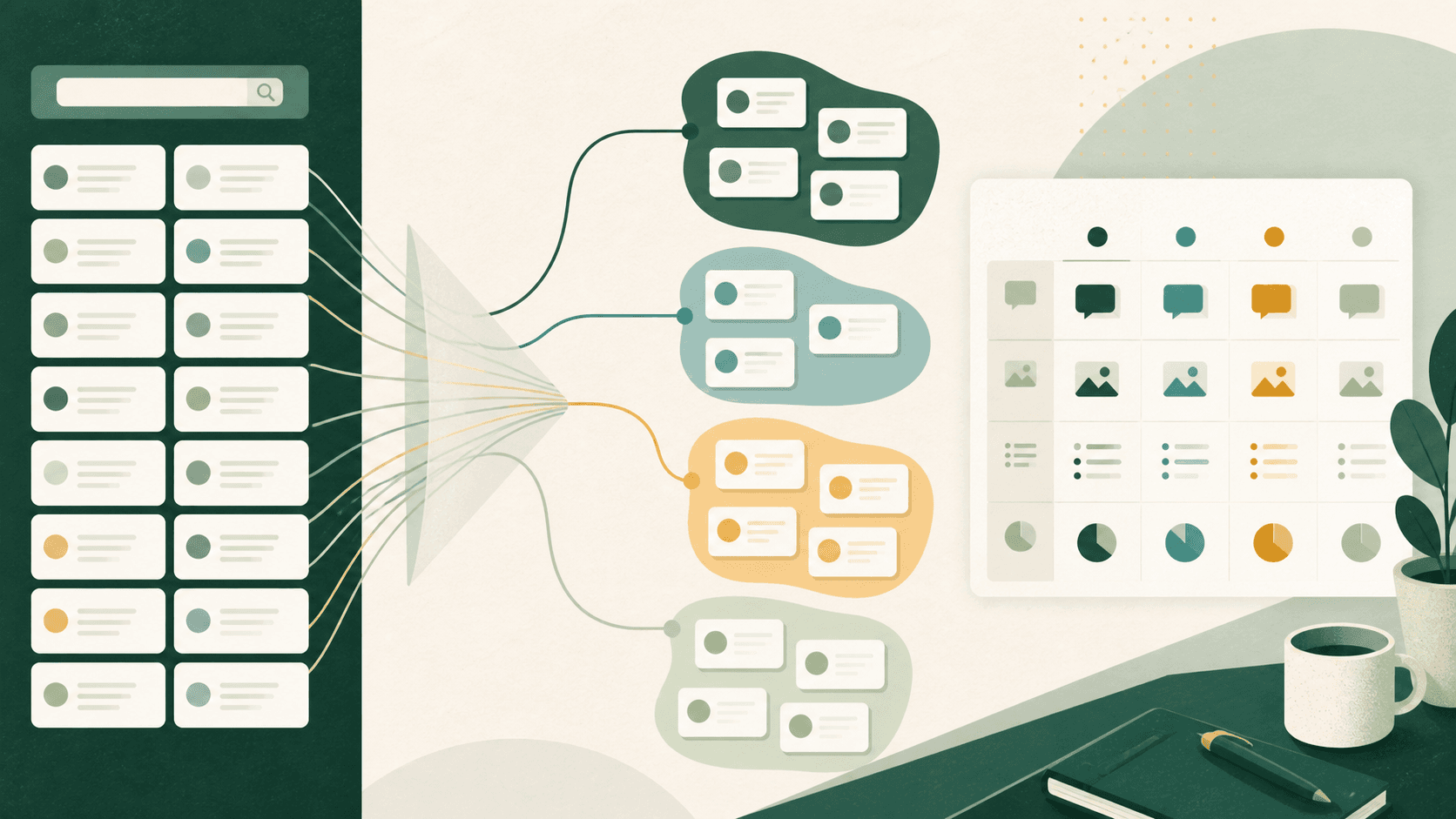
Google describes Search Console data as processed rather than a real-time server log. The Performance report groups data by dimensions such as query, page, country, device, date, and search appearance, while some queries may be omitted for privacy. Filters and grouping choices can therefore change totals and the apparent shape of a trend.
Bulk export can support longer retention and property-specific analysis, but it does not convert Search Console into a causal measurement system. A recent low value may reflect incomplete processing, a chosen filter, excluded low-volume queries, or a real change. The interface alone does not identify which explanation is correct.
Operating interpretation
Label the newest observations provisional. Save the exact search type, filters, dimensions, timezone, and comparison dates. Revisit the same view after its normal property-specific settling window before escalating a decline. Compare affected pages and query groups instead of relying only on a sitewide total.
When the movement remains, examine indexing, releases, demand patterns, and analytics independently. Phrase the result as an observation until those checks support an explanation.
Inference limits and limitations
Google does not promise one delay that applies to every property and report. This synthesis cannot distinguish latency from demand loss for a specific site, and it does not measure ranking, conversions, bot activity, or analytics implementation quality. Teams should establish their own observed reporting pattern and retain uncertainty when privacy filtering or aggregation limits diagnosis.
Sources
- Google Search Console Help, “About Search Console data,” https://support.google.com/webmasters/answer/96568
- Google Search Console Help, “Performance report,” https://support.google.com/webmasters/answer/7576553
- Google Search Central, “Search Console bulk data export,” https://developers.google.com/search/blog/2023/02/bulk-data-export