Published September 7, 2026.
Research question
How should a small publisher select internal links for a new article when no universal link count defines quality?
Scope and method
This brief combines official search guidance on crawlable links with accessibility guidance on understanding link purpose from its context. It derives a review method; it does not measure ranking lift.
Findings
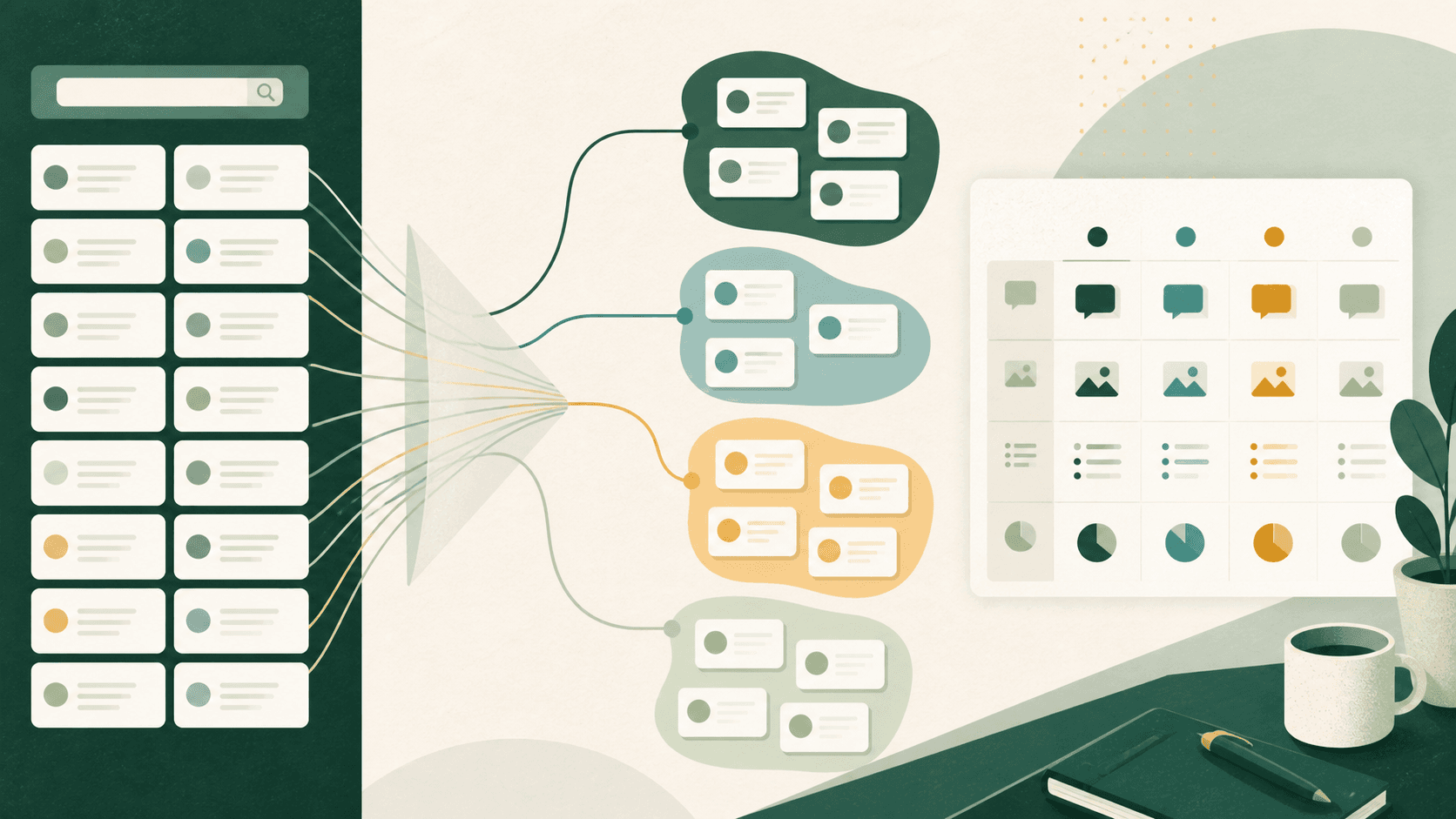
A candidate link is useful when the destination advances the task established by the surrounding passage. Descriptive anchors help readers anticipate that destination and help maintainers understand the relationship. Relevance should be evaluated at sentence and page level, not inferred from a shared keyword alone.
The method begins with the new page's question, finds existing pages that logically precede or follow it, and rejects candidates that require an artificial sentence. A small recorded set is easier to verify after release than sitewide insertion based on a quota.
Implementation boundary
Operators can propose and validate links. Editors should decide when pages overlap enough to merge, specialize, or redirect. Every changed source route and destination should return successfully and preserve the intended canonical.
Limitations
The cited guidance does not prescribe an optimal number of internal links. Site structure, page length, navigation, and reader needs vary. This framework does not isolate internal links as a cause of traffic or ranking changes.
Conclusion
Reader continuity provides a defensible selection rule: add a link when its context makes the next destination useful, and leave it out when the relationship must be forced.
Sources
- Google Search Central, Links best practices: https://developers.google.com/search/docs/crawling-indexing/links-crawlable
- W3C WAI, Link purpose in context: https://www.w3.org/WAI/WCAG22/Understanding/link-purpose-in-context.html
- Google Search Central, SEO Starter Guide: https://developers.google.com/search/docs/fundamentals/seo-starter-guide